
VIOFO A329S 3CH vs Vantrue N4 Pro S
Both record the road, cabin, and rear at once. VIOFO gives you the wider 2K cabin view and an SSD path; Vantrue gives you an integrated cabin lens, a larger screen, and a simpler 1TB microSD path.
By Adam Anderson, Editor and CEO
This article contains paid Amazon links. Gearsentials may earn a commission from qualifying purchases. Affiliate standards.
VIOFO A329S 3CH vs Vantrue N4 Pro S specifications
| Decision | VIOFO A329S 3CH | Vantrue N4 Pro S | Why it matters |
|---|---|---|---|
| Three-channel video | 4K30 front + 2K30 cabin + 2K30 rear | 4K30 front + 1080p cabin + 2.5K/1440p rear | VIOFO gives the cabin channel more pixels |
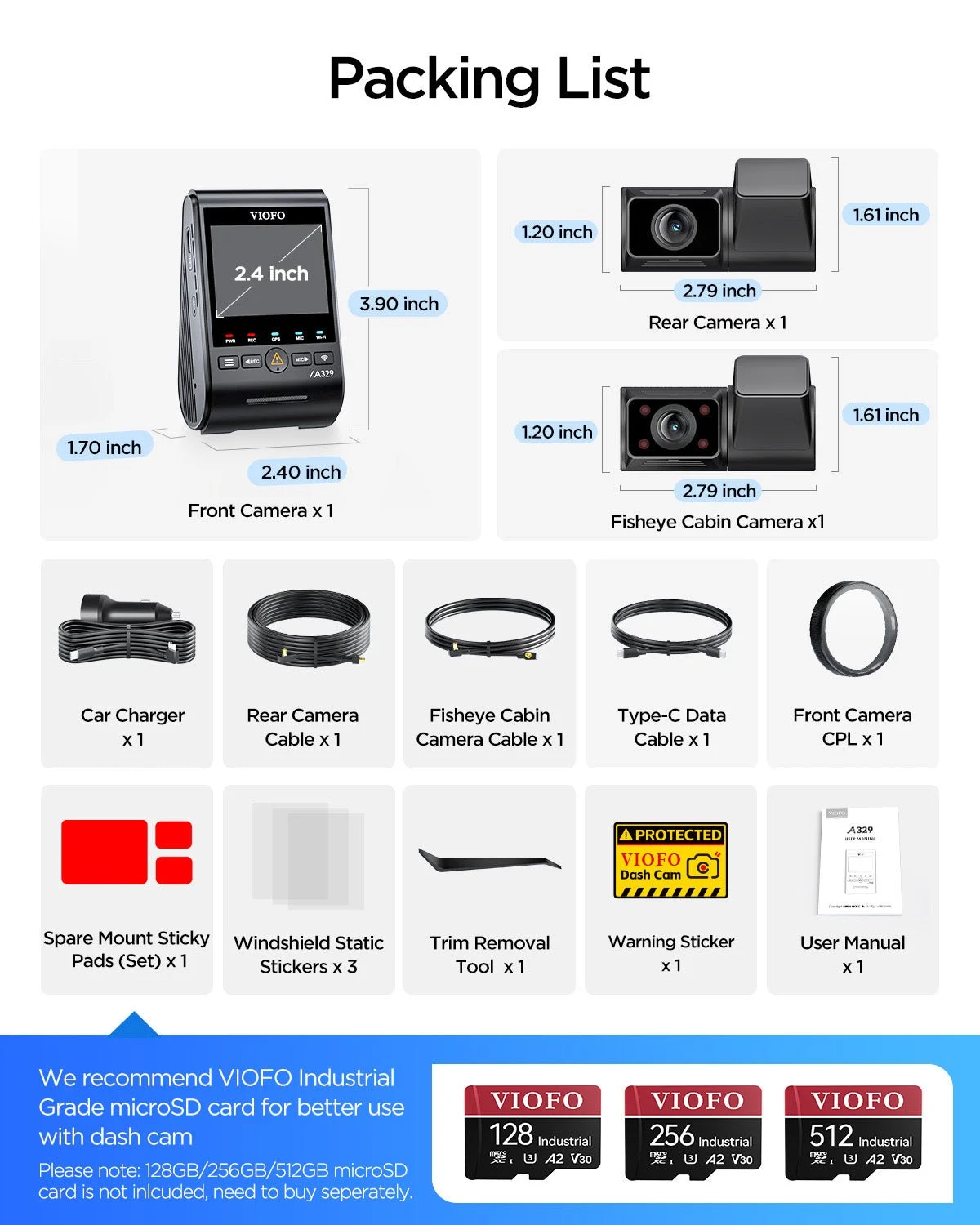
| Cabin camera | Separate 210° fisheye module with four IR LEDs | Integrated 160° lens with four IR LEDs | VIOFO sees wider; Vantrue routes one fewer remote-camera cable |
| Rear camera | 160° 2K module for interior mounting | 165° 2.5K/1440p RC18 module for interior mounting | Both selected kits use a standard interior rear module |
| Storage | Up to 512GB microSD or 4TB external SSD | Up to 1TB microSD | Vantrue has the simpler large-card path; VIOFO has the larger archive ceiling |
| SSD requirements | SSD, VIOFO SSD cable, and hardwire power are separate | No external SSD support documented | Don’t treat VIOFO's 4TB headline as an included feature |
| Parking power | HK4 or HK6 hardwire kit sold separately | Hardwire kit sold separately | Neither standalone Amazon offer is a complete parking kit |
| Wireless and location | Wi-Fi 6 on 2.4/5GHz, GPS, Bluetooth | 2.4/5GHz Wi-Fi, GPS | Both support app review; VIOFO documents the faster wireless standard |
| Display | 2.4-inch | 3.19-inch | Vantrue is easier to review from the camera itself |
| Power design | Supercapacitor | Supercapacitor | Neither depends on a small internal lithium battery |
| Included in exact offer | Front CPL, power/data cables, mounts and three cameras; no card or hardwire kit | Power/data/rear cables, mounts and three cameras; no card, CPL or hardwire kit | Budget for the missing installation pieces before comparing totals |
Don’t buy either camera for a 4K badge
The useful specification is the simultaneous recording mode. The VIOFO's selected three-channel configuration records 4K30 front, 2K30 cabin, and 2K30 rear. Its 4K60 headline applies only to compatible one- or two-channel setups with HDR off. Vantrue's three-channel mode records 4K front, 1080p cabin, and 2.5K/1440p rear at 30 frames per second.
Also ignore the rear-camera naming contest. VIOFO calls its rear stream 2K while Vantrue calls its roughly 1440p-class stream 2.5K. That label doesn’t prove the Vantrue preserves more useful detail. Lens quality, processing, exposure, mounting position, rear glass, and vehicle movement can matter more than the rounded marketing name.
Plate capture changes by scene
In The Hook Up's controlled comparison, VIOFO led the daytime capture scenarios and Vantrue led the nighttime scenarios. The two finished evenly overall, and neither captured every fast nighttime plate. That’s the honest result: there’s no universal winner and no dash cam can guarantee a readable plate.
Relative speed, headlights, shutter time, angle, distance, rain, windshield glare, dirt, and compression can erase characters. Treat a locked clip as evidence to preserve, not proof that every detail will be legible. If something important happens, copy the original files to another device before more driving or formatting the card.
Choose VIOFO for the cabin and the more flexible archive
VIOFO's cabin camera is the biggest everyday difference. It’s a separate 2K module with a 210-degree fisheye view and four infrared LEDs. The wider frame can see more of the passenger compartment and side windows, while the separate mount lets you position it around a mirror, windshield sensor cluster, or vehicle-specific blind spot.
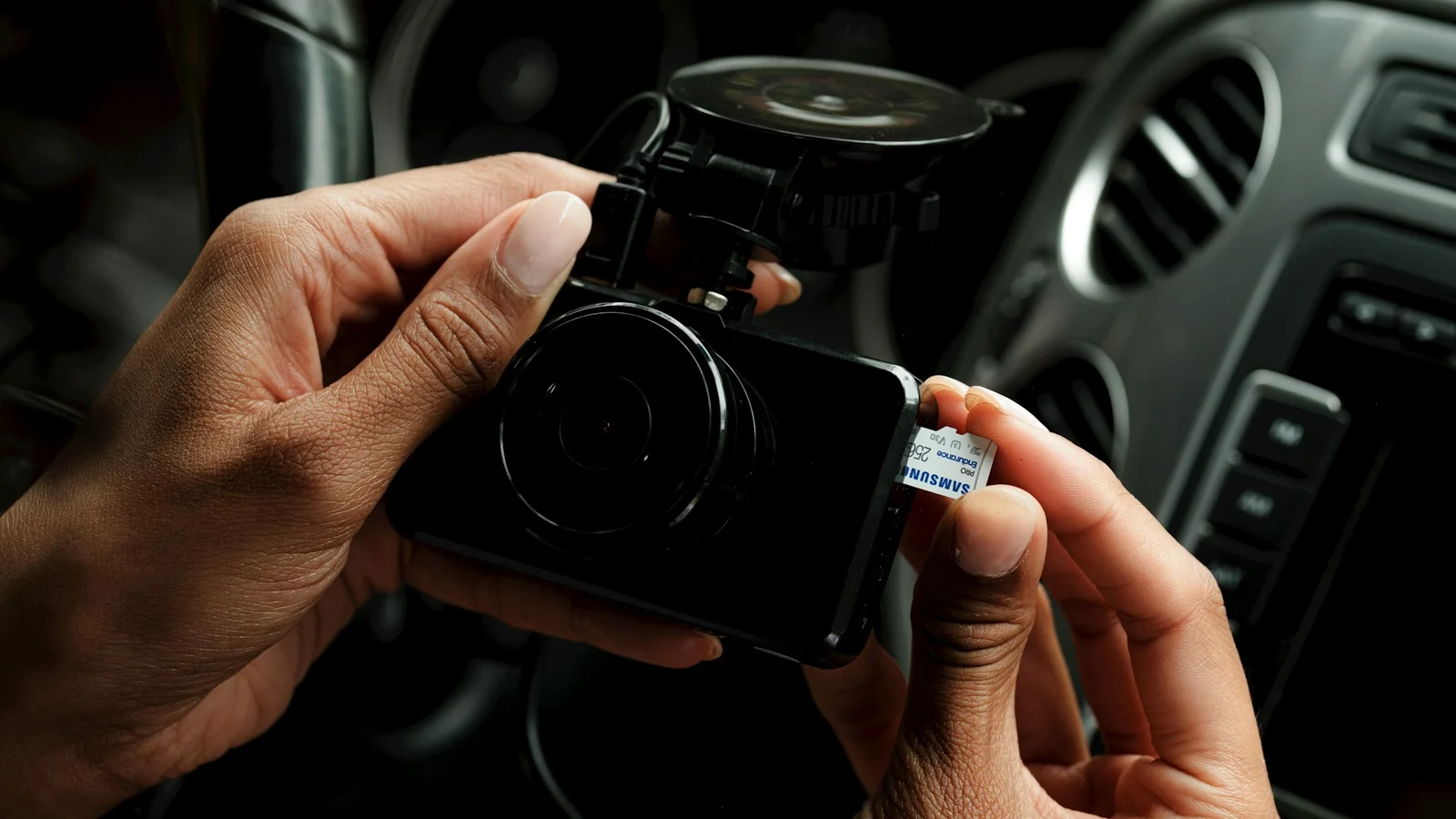
Storage is the other VIOFO advantage, but only for buyers willing to assemble the path. A microSD card can be up to 512GB. An external SSD can be up to 4TB, but the SSD, VIOFO cable, and hardwire power are separate. Buy that setup for long road trips or a genuine need to preserve days of footage—not because 4TB sounds impressive.
The SSD also doesn’t replace the microSD card in every parking mode. VIOFO says hybrid parking and low-power impact recording save to microSD rather than the external SSD. Keep a compatible card in the camera even when the larger drive is part of the plan.
VIOFO A329S 3CH buying option
Paid links. Gearsentials may earn a commission from purchases.
Best for: Drivers who want the widest 2K cabin view, flexible module placement, and optional SSD archives. Skip if: A separate cabin module and its cable create more installation work than the vehicle needs.
Choose Vantrue for simpler cabin wiring and one large card
Vantrue builds the cabin lens into the main unit. That 1080p, 160-degree camera is narrower than VIOFO's, but it removes one remote camera and one cable from the windshield. The 3.19-inch screen is also easier to use for quick on-device review than VIOFO's 2.4-inch display.
The verified Amazon destination is specifically the RC18 package. Its 2.5K/1440p rear camera is a standard non-waterproof module for interior mounting, with a 165-degree published field of view. Don’t confuse it with Vantrue's separate RC09 waterproof package: the camera, cable, mounting plan, and exact offer are different.
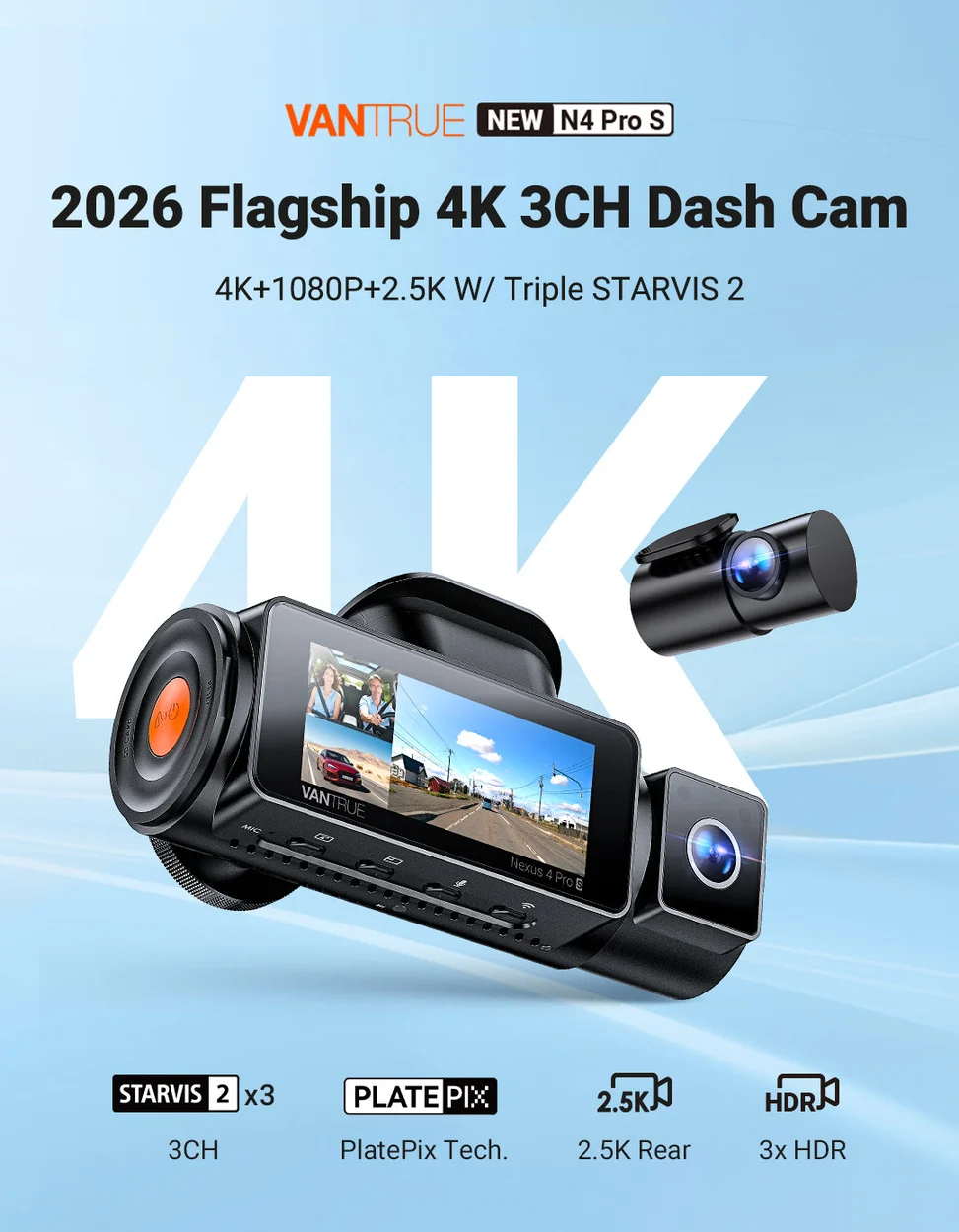
The standalone Amazon offer supports up to a 1TB microSD card, but it doesn’t include the card, CPL filter, remote, LTE accessory, or hardwire kit. Those appear in other bundles and accessories. Compare the exact selected offer instead of assuming every product-page image describes what arrives in this box.
Vantrue N4 Pro S buying option
Paid links. Gearsentials may earn a commission from purchases.
Best for: Drivers who want an integrated cabin lens, a 1TB card path, larger screen, and fewer remote modules. Skip if: The 1080p 160-degree cabin view is too narrow for the passenger or side-window coverage you need.
Parking mode costs more than the camera listing
Neither standalone kit is ready for continuous parking coverage. Both manufacturers require a separately sold hardwire kit or another compatible constant-power installation. A proper setup also needs an appropriate fuse path, low-voltage cutoff, cable routing, and settings that match the vehicle and parking environment.
VIOFO has the stronger evidence for impact-only parking. In The Hook Up's comparison, its tested impact mode retained footage from before the collision, while the Vantrue took several seconds to wake after the impact. That’s one test on particular firmware and settings, not a promise for every installation, but it’s a more meaningful reason to choose VIOFO than another resolution badge.
Check local rules before mounting or recording audio. Windshield placement, visible obstruction, and in-cabin recording consent vary by jurisdiction. A dash cam that blocks the driver's view or records passengers unlawfully isn’t a useful safety upgrade.
The verdict
VIOFO A329S 3CH is the more capable cabin and storage system. It has the more flexible parking and storage system. It asks for more setup, but the extra hardware choices solve real problems for rideshare, family, and long-distance use.
Vantrue N4 Pro S is easier to install when an integrated cabin lens, a larger microSD card, and fewer remote modules more than the VIOFO's wider cabin view and SSD path. It isn’t a weaker version of the same kit; it's a different installation decision. The best dash cam is still the one you’ll wire correctly and leave running.
Compare the exact current kits
Paid links. Gearsentials may earn a commission from purchases.
Best for: VIOFO for wider cabin and storage flexibility; Vantrue for an integrated cabin lens and simpler 1TB-card workflow. Skip if: A simpler front-only camera covers the evidence you actually need.
FAQ
Does the VIOFO A329S record 4K60 with all three cameras?
No. VIOFO documents 4K30 front, 2K30 cabin, and 2K30 rear in three-channel mode. Its 4K60 mode is available only in compatible one- or two-channel configurations with HDR turned off.
Which dash cam is better for rideshare driving?
The VIOFO has the stronger published cabin setup: a separate 2K camera with a 210-degree fisheye view and infrared LEDs. The Vantrue integrates its 1080p 160-degree cabin lens into the main unit, which reduces remote-camera wiring. Choose between wider cabin coverage and simpler installation.
Do these dash cams record while the car is parked?
They can, but the standalone offers aren’t complete parking kits. Both manufacturers say parking operation requires a separately sold hardwire kit or another compatible constant-power installation. Installation and cutoff settings must suit the vehicle.
Do I need to buy a memory card?
Yes for both standalone offers. Use a compatible high-endurance card, follow the manufacturer's formatting guidance, and copy important clips promptly. VIOFO supports up to 512GB microSD; Vantrue documents up to 1TB.
Will either camera always capture a readable license plate?
No dash cam can promise that. Relative speed, shutter time, glare, headlights, angle, distance, dirt, weather, settings, and compression can make a plate unreadable. Independent testing found each model won different scenes rather than one winning every capture.
What is the difference between Vantrue RC18 and RC09?
The verified Amazon offer is the N4 Pro S with the standard non-waterproof RC18 rear camera for interior mounting. Vantrue also sells an RC09 waterproof rear-camera package. Confirm the rear-camera code before buying because the packages and cables are different.