
Ring Battery Doorbell vs Plus vs Pro (2026)
These battery doorbells climb from basic alerts to sharper video and radar. Your plan, Wi-Fi, charging routine, and front door can matter more than the model badge.
By Adam Anderson, Editor and CEO
This article contains paid Amazon links. Gearsentials may earn a commission from qualifying purchases. Affiliate standards.
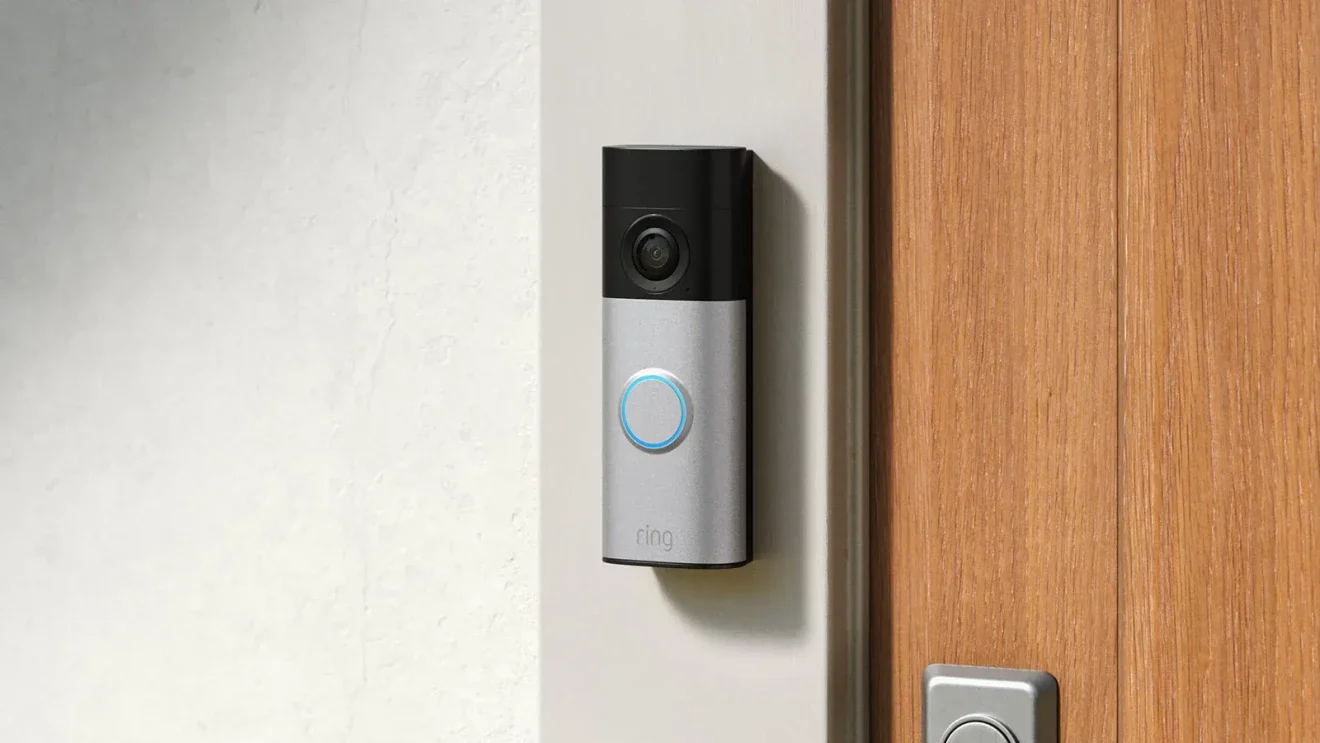
Ring Battery Doorbell specifications
| Decision | Base | Plus | Pro |
|---|---|---|---|
| Published pixels | 1920×1920 | 1920×1920 with HDR | 2880×2880 with HDR |
| View and zoom | 140° H × 140° V; 6× | 140° H × 140° V; 6× | 140° H × 140° V; 10× |
| Battery | Built in; remove doorbell to charge | Removable Quick Release pack | Removable Quick Release Ultra pack |
| Wi-Fi | Wi-Fi 4; 2.4GHz | Wi-Fi 6; 2.4/5GHz | Wi-Fi 6; 2.4/5GHz |
| Ring upload guidance | 10Mbps | 10Mbps | 15Mbps |
| Motion system | Standard Motion Detection | Advanced Motion Detection | Radar-based 3D Motion Detection |
| Night system | Infrared night vision | Adaptive low-light system | Adaptive low-light system |
Decide about the subscription before the camera
All three remain useful without a paid plan for doorbell-press alerts, generic motion alerts, Live View, Two-Way Talk, motion and privacy zones, and Ring's documented Alexa features. That is enough for someone who only wants to answer the door live.
A compatible Ring Protect plan is required for recorded video, event history, saving or sharing clips, and person or package Smart Alerts. That last detail matters: Pro's radar can map where motion occurred, but it doesn’t make package or person classification plan-free.
None of these doorbells has an onboard microSD slot. Ring Edge is a separate local-processing route that requires compatible Ring Alarm Pro hardware, storage, networking, and a plan; it’s not a simple plan-free card slot in the doorbell. If local, subscription-free recording is a requirement, compare another camera system before choosing among these three.
Subscription rule
Don’t pay for Pro expecting the hardware tier to unlock recordings or package identification. Choose the service model first, then the camera.
Ring Battery Doorbell: the value pick with recharge downtime
The current Base is more competitive than older comparison pages suggest. Ring documents the same 1920×1920 square image, 140-degree horizontal and vertical view, and 6× Enhanced Zoom it publishes for the current Plus. It isn’t the old low-detail option next to a clearly higher-resolution Plus.
The tradeoff is physical. Its rechargeable battery is built into the doorbell, so the whole unit comes off the mount for charging. Unless a second camera covers the entry, the front door has no video doorbell during that recharge. The Base also uses 2.4GHz Wi-Fi 4, which can travel farther through some walls but gives you no 5GHz option.
Choose it when the upfront hardware cost matters most, the actual mounting point has stable 2.4GHz service, and periodic removal is acceptable. Ring documents USB-C charging for the built-in battery, but the exact Amazon offer doesn’t list a charging cable in the box, so check what you already own.
Reasons to skip the Base
- You need uninterrupted coverage while a battery charges.
- Your front-door network works better on 5GHz.
- You want HDR, adaptive low-light behavior, or more advanced motion controls.
Base buying option
Paid links. Gearsentials may earn a commission from purchases.
Ring Battery Doorbell Plus: the best default for most buyers
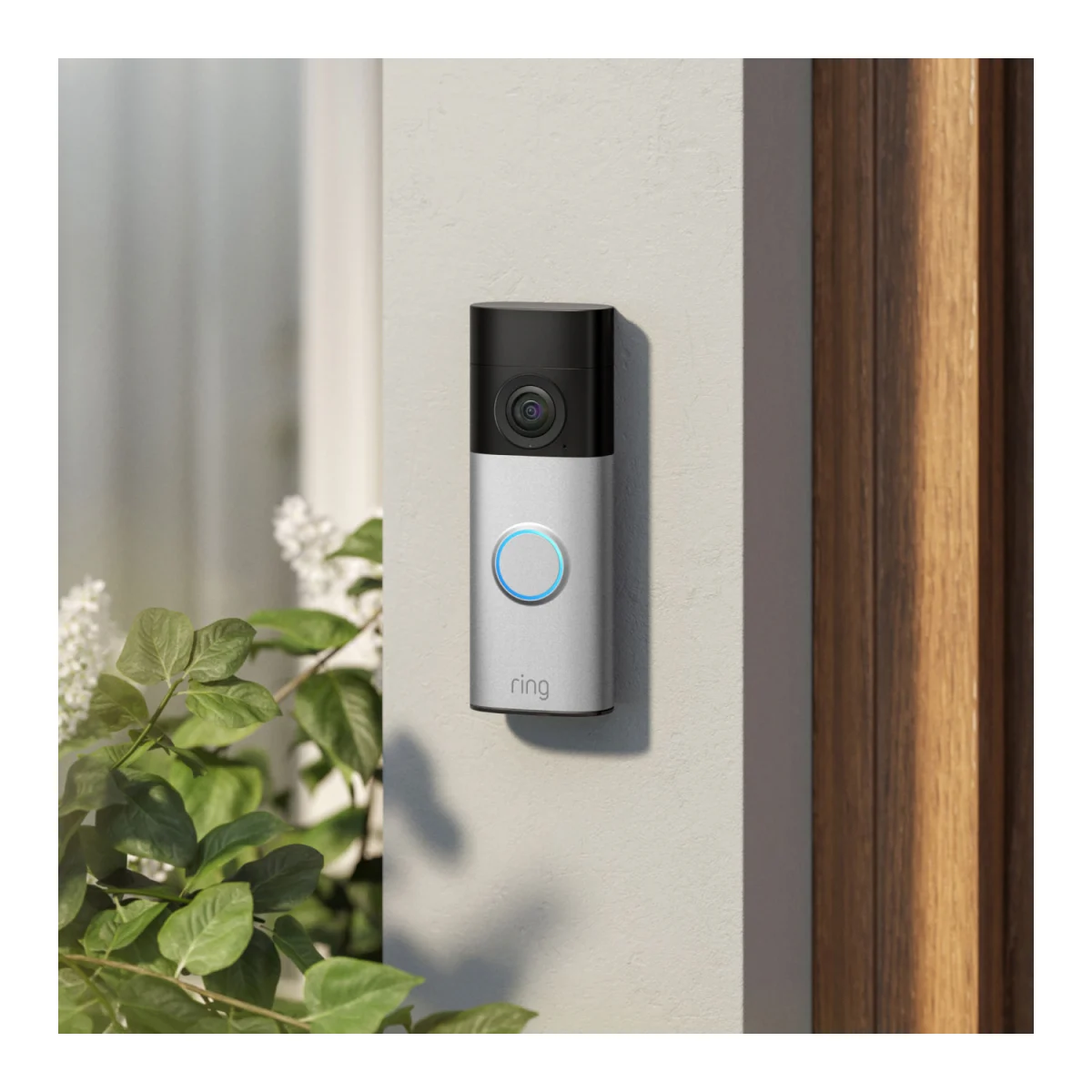
Plus earns its position through daily-use details rather than more pixels. Its Quick Release Battery Pack slides out while the doorbell stays mounted, and a charged spare can shrink downtime to a battery swap. Dual-band Wi-Fi 6 gives you both 2.4GHz and 5GHz options at the mounting point.
It also adds HDR, Advanced Motion Detection, and Ring's adaptive low-light system. With enough ambient light, Ring says Plus can retain color; in near darkness it switches to black-and-white night vision. That’s a conditional improvement, not a promise of full-color footage in every porch.
Ring's current support and product text conflict on whether the Plus battery pack charges over USB-C or Micro-USB. Current independent reviews received Micro-USB hardware, while a support page says USB-C. Don’t make the connector your deciding feature; verify the included pack and cable when the exact offer arrives.
Reasons to skip the Plus
- You can accept whole-unit charging and only need the shared 1920×1920 framing.
- You need Pro's radar motion zones or 10× zoom.
- You won’t use a Ring plan and expected Plus to include plan-free smart alerts.
Plus buying option
Paid links. Gearsentials may earn a commission from purchases.
Ring Battery Doorbell Pro: pay for detail and radar, not the badge
Pro moves to a documented 2880×2880 square image and 10× zoom. Ring calls it Retinal 4K, but don’t read that as conventional 3840×2160 UHD. The practical case is more room to inspect a face, package, or approach path—not a television-style 4K format.
Its other meaningful upgrade is radar-based 3D Motion Detection, including Bird's Eye Zones and Bird's Eye View. That can help define where someone must move before the camera reacts. Pro also adds Audio+ and a removable Quick Release Ultra Battery Pack that charges over USB-C. Ring says the Pro can also use the standard Quick Release Battery Pack, although that pack doesn’t become an Ultra pack.
The network is part of the purchase. Ring recommends 15Mbps upload for Pro, compared with 10Mbps for Base and Plus. A Tom's Guide reviewer reported a front-door connection that usually measured 7–9Mbps and sometimes 12Mbps, then found the footage less sharp than the headline specification suggested. That’s one installation, but it illustrates why a stronger camera can’t repair a weak route to the router.
Reasons to skip the Pro
- You haven’t measured a stable front-door signal and upload path.
- You don’t have a specific use for radar zones, 10× zoom, or the extra pixels.
- You expect the most expensive hardware to remove Ring's recording subscription.
Pro buying option
Paid links. Gearsentials may earn a commission from purchases.
Mounting position can matter more than 2K versus 4K
All three publish the same 140-degree horizontal and vertical head-to-toe view. That helps show a visitor and the doorstep, but it doesn’t guarantee that every package lands inside the frame. The wall height, wedge angle, door recess, steps, and the spot where a driver leaves a parcel all change what the camera can see.
In one current Plus test, Expert Reviews mounted the camera around 1.7 meters high and found that packages placed within roughly 38 centimeters of the bottom of the door fell below its frame. That isn’t a universal blind-zone measurement; it’s a reason to preview Live View at the real mounting point before drilling and to use a wedge when the doorstep geometry needs it.
Small or irregular deliveries are another limitation. A package alert is a classification made from the image and a paid cloud feature, not a physical parcel sensor. Envelopes, tubes, bags, and boxes hidden by a door swing can be harder to classify even when a person alert works.
What current independent tests found
Expert Reviews measured doorbell alerts under 1.5 seconds and requested Live View usually under 2.5 seconds for the current Plus on its network. Security.org reported roughly one to two seconds of Two-Way Talk delay in broader Ring testing. Those results show that the system can respond quickly, but they are not a controlled same-door comparison of the Base, Plus, and Pro.
Low-light results also vary. TechRadar found useful color on the Plus under external lighting and black-and-white video in near darkness. Expert Reviews saw good color initially but frequent switches to monochrome after a few seconds. Tom's Guide found the Pro useful in low light but unable to preserve small text or plate detail in deep darkness. Placement and porch lighting can matter more than the model name.
No credible current test we found ran all three second-generation battery models at the same door long enough to rank battery life, false-alert rates, package recognition, or long-term reliability. We therefore don’t claim that Pro is faster, that Plus catches more packages, or that any model lasts a fixed number of months.
Check these five things at the actual front door
- Subscription: decide whether live-only use is enough or whether saved video and Smart Alerts justify a plan.
- Signal: test Wi-Fi and upload speed outside at the mounting point with the door closed.
- Frame:use Live View to check faces, the doorstep, steps, and the door's swing before final mounting.
- Recharge plan: choose whole-unit removal, a spare swappable battery, or compatible 8–24VAC trickle wiring.
- Platform: Alexa is the documented native integration. Ring doesn’t document native Apple Home, Google Home, or Matter support for these models.
The model names are about to change
Ring says that on August 5, 2026, Battery Doorbell (2nd Gen), Battery Doorbell Plus (2nd Gen), and Battery Doorbell Pro (2nd Gen) will be renamed Battery Doorbell 2K, Battery Doorbell 2K Plus, and Battery Doorbell 4K Pro. Ring describes this as a name change, not new hardware. Match the ASIN and generation rather than assuming a renamed listing is a fourth model.
The verdict
The Base is the value pick. Its current 1920×1920 head-to-toe image removes much of the old resolution penalty, provided 2.4GHz service is stable and whole-unit charging is acceptable.
The Plus is the best default for most Ring buyers. The removable battery, dual-band Wi-Fi, HDR, adaptive low-light system, and advanced motion controls change everyday ownership more than a resolution label would.
The Pro is a specialized upgrade.It earns the price through a measured need for 2880×2880 detail, 10× zoom, radar zones, Bird's Eye features, Audio+, or its USB-C Ultra pack—and only after the front-door connection can support it.
Skip the lineup when plan-free recording, onboard microSD, or a documented native non-Alexa smart-home integration is a hard requirement. A sharper video feed doesn't fix a subscription you already resent.
Compare the exact current offers
Paid links. Gearsentials may earn a commission from purchases.
FAQ
Do Ring Battery Doorbells work without a subscription?
Yes, but only for real-time use. Without a compatible Ring Protect plan, the current battery models retain doorbell and generic motion alerts, Live View, Two-Way Talk, motion-zone controls, and documented Alexa features. Recorded video, event history, saving and sharing clips, and person or package Smart Alerts require a compatible plan.
What is the difference between Ring Battery Doorbell and Plus?
Both current second-generation models are documented at 1920 by 1920 with a 140-degree horizontal and vertical view. Plus adds a removable battery, dual-band Wi-Fi 6, HDR, Ring's adaptive low-light system, and Advanced Motion Detection. The Base has a built-in battery and 2.4GHz Wi-Fi only.
Is Ring Battery Doorbell Pro 4K?
Ring markets the Pro as Retinal 4K, but its documented square resolution is 2880 by 2880—not 3840 by 2160 UHD. It also adds 10x Enhanced Zoom, radar-based 3D Motion Detection, Bird's Eye features, Audio+, and a USB-C Quick Release Ultra Battery Pack.
Can these battery doorbells use an existing indoor chime?
Ring documents optional connection to compatible 8–24VAC doorbell wiring for trickle charging and an existing compatible chime. That connection doesn’t turn the battery model into a wired-only camera or eliminate every future battery recharge.
Which Ring Battery Doorbells have removable batteries?
The current Plus and Pro have removable battery packs, so a charged spare can reduce camera downtime. The Base battery is built in, which means removing the entire doorbell from its mount to recharge it.
Does Ring Battery Doorbell Plus support 5GHz Wi-Fi?
Yes. The current second-generation Plus and Pro support dual-band 2.4GHz and 5GHz Wi-Fi 6. The current second-generation Base uses 2.4GHz Wi-Fi 4 only.
Sources
- Ring current battery-doorbell comparison
- Ring Battery Doorbell 2nd Gen specifications
- Ring Battery Doorbell Plus 2nd Gen specifications
- Ring Battery Doorbell Pro 2nd Gen specifications
- Ring Protect plans
- Ring alert and subscription requirements
- Ring 2026 product-name changes
- Expert Reviews Battery Doorbell Plus 2nd Gen test
- TechRadar Battery Doorbell Plus 2nd Gen test
- Tom's Guide Battery Doorbell Pro 2nd Gen test