
Roborock Saros 20 vs Dreame X60 Max Ultra Complete
These are two very expensive robot vacuums built for different kinds of mess. The hard part isn’t the suction number. It’s how each one handles your rugs, hair, clutter, steps, and weekly upkeep.
By Adam Anderson, Editor and CEO
This article contains paid Amazon links. Gearsentials may earn a commission from qualifying purchases. Affiliate standards.
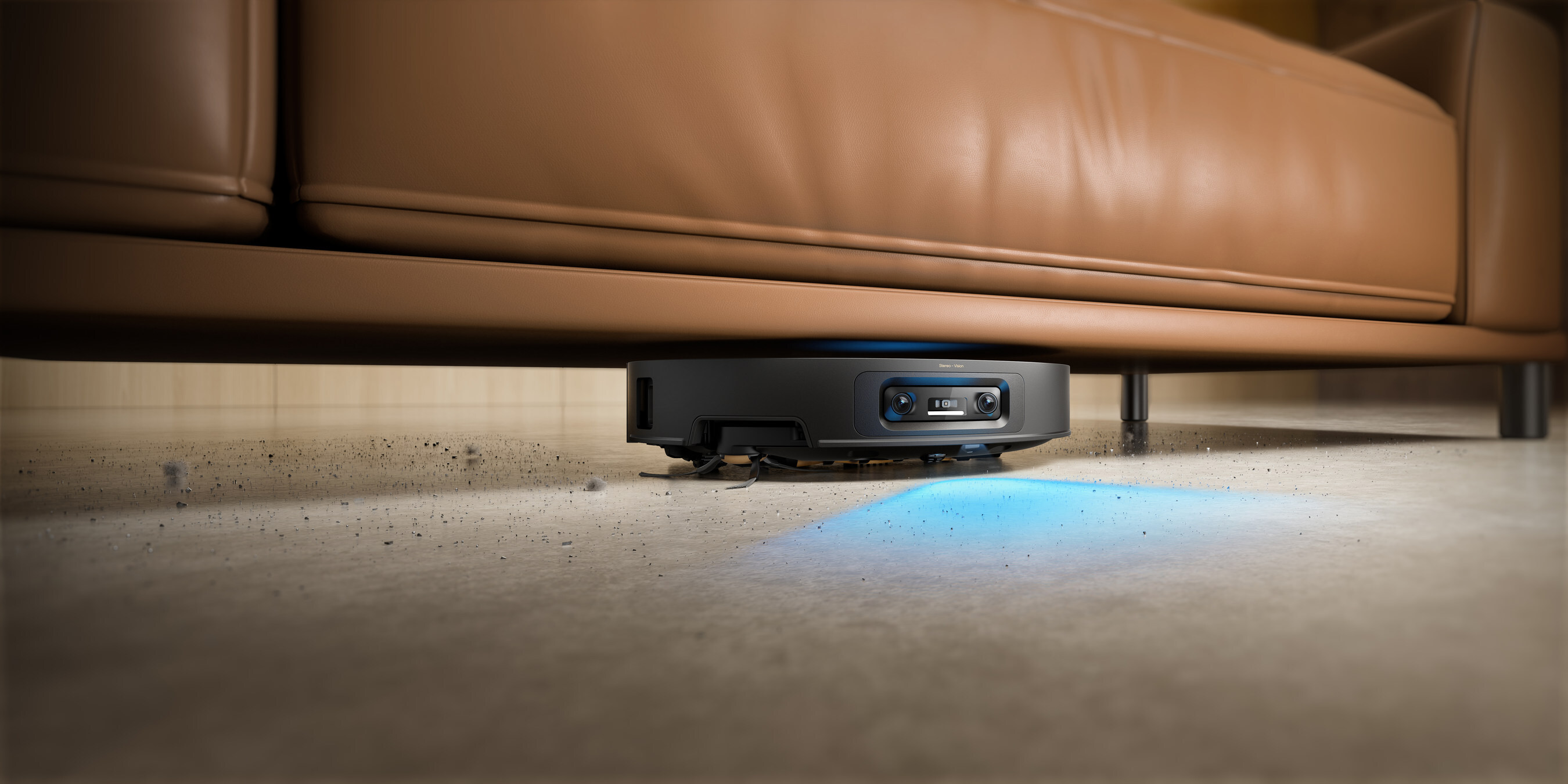
Measure the home before comparing suction numbers
The most useful robot-vacuum specification is often a measurement that isn’t on the box. Spend five minutes with a tape measure and a phone note before paying for either flagship:
- Find the lowest hard furniture edge. Measure the frame or support rail, not the top of a cushion. Check the middle too; couches and beds can sag.
- Measure every threshold twice. Record the vertical rise and the usable landing depth. A two-step saddle is not the same obstacle as one vertical lip.
- List problem rugs. Note tassels, curled edges, bathroom mats, and thin rugs that bunch when a robot approaches.
- Audit the floor at its messiest. Cords, socks, pet toys, building blocks, and the chance of a pet accident matter more than a clean demonstration room.
- Plan the dock service area. Add room above for tanks and lids, room in front to remove the robot and tray, and a practical path to the sink and dirty-water drain.
- Decide whether indoor cameras are acceptable.Both robots use cameras and software to recognize objects. The advanced features you’re paying for live inside an app-centered system.
This checklist can eliminate a model before any benchmark does. A robot that wins a lab test but can’t enter the sofa, cross the bedroom saddle, or survive the bath mat is the wrong robot for that house.
Roborock Saros 20 vs Dreame X60 test results
The table separates manufacturer specifications from independent tests. The carpet, pet-hair, hair-wrap, obstacle, and threshold results come from Vacuum Wars. They are useful because the two robots went through the same organization's protocols; they are not guarantees for a different floor plan, rug, pet, or firmware.
| Decision | Roborock Saros 20 | Dreame X60 Max Ultra Complete | Buying consequence |
|---|---|---|---|
| Best reason to buy | Hard-floor edge-cleaning evidence and the higher Vacuum Wars single-barrier result | Flattened pet-hair pickup, small-object avoidance, and strong standardized mopping results | Choose for the problem your home actually has |
| Carpet deep-clean test | 89% embedded sand removed | 89% embedded debris removed | Vacuum Wars measured a tie in its carpet protocol |
| Flattened pet-hair test | 88% pickup | 100% pickup | Dreame has the clearer matched-test advantage for pressed-in hair |
| Seven-inch hair-wrap test | 0% wrap | 0% wrap | Both anti-tangle brush systems passed this test |
| Obstacle-avoidance test | 17 of 24 objects avoided | 22 of 24 objects avoided | Pre-clean cords and pet accidents anyway; no score is a guarantee |
| Vacuum Wars single-barrier test | 57mm crossed | 51mm crossed | Roborock led this matched protocol, but RTINGS measured only 38mm from Saros 20 |
| Body and low-space rule | 3.14-inch body; Roborock says 3.13-inch entry may be possible through compression, with scraping risk | 3.13-inch body with sensor retracted; Dreame specifies at least 3.19 inches of entry clearance | Measure the lowest hard edge and leave margin |
| Dock footprint | 15.00 x 18.70 x 19.21 inches | 15.34 x 16.65 x 19.65 inches | Also leave room above and in front to service tanks and bags |
| Main caution | Small-object and pet-accident avoidance isn’t dependable enough for a cluttered floor | One home test found frequent water attention and mop pads popping off around some rugs | The dock reduces chores; it doesn’t remove ownership work |
Where the two robot vacuums tie
The matched results aren’t all tradeoffs. Vacuum Wars measured 89% embedded-debris removal from both robots in its carpet deep-clean protocol, and both recorded zero wrap in its seven-inch hair test. Both also produced strong dried-stain mopping results, but their published scores were compared with different category averages at different times, so the available evidence doesn’t support turning those numbers into a direct percentage win.
Their practical low-furniture height is nearly tied too. Those similarities make the home-specific differences—pressed-in hair, small objects, hard-floor edges, threshold geometry, rugs, and maintenance—the useful reasons to choose.
Dreame led the pressed-in carpet-hair and clutter tests
Dreame's cleanest advantage isn’t its company-rated 35,000Pa number. It’s the result after hair and objects hit the floor. Vacuum Wars measured 100% pickup in its flattened pet-hair test, 0% wrap in its seven-inch hair test, and 22 of 24 avoided objects. The Saros 20 also prevented hair wrap, but picked up 88% of the pressed-in hair and avoided 17 of 24 objects.
That makes the X60 Max Ultra Complete the better starting point when pressed-in carpet hair and everyday clutter are the problems. It doesn’t make the floor safe to ignore. A camera can’t guarantee recognition of every cable, clear toy, rug edge, or pet accident. A ten-second floor check remains cheaper than a damaged cable or a contaminated robot.
The downside is intervention of a different kind. An Android Authority home test reported that the X60 used enough water to require attention after roughly 600 square feet under its reviewer's normal load and that its magnetic mop pads sometimes popped off around rugs. That’s one home test, not a universal capacity claim, but it’s exactly the kind of ownership friction a specification table misses.
Dreame buying option
Paid links. Gearsentials may earn a commission from purchases.
Exact X60 Max Ultra Complete model checked August 2, 2026. Confirm X60 Max Ultra Complete—not X60 Ultra.
Best for: Pressed-in carpet pet hair, cluttered rooms, small-object avoidance, and strong automated mopping. Skip if: Thin rugs already cause robot trouble, frequent water attention will annoy you, or a simpler vacuum covers the same floor.
Roborock led one threshold test, but results disagree
The brands advertise almost the same headline: roughly 3.5 inches of double-layer threshold crossing. The footnotes change the meaning. Roborock's 3.46-inch total requires a first rise no higher than 1.77 inches, a landing between 4.72 and 5.51 inches, and a second rise no higher than 1.69 inches. Dreame's 3.47-inch claim requires a double-layer step with more than 9.06 inches of lower-level surface; its single-layer claim is 1.77 inches.
In other words, neither company is promising to drive straight up one 3.4-inch wall. Vacuum Wars' single-barrier test is the more useful matched comparison for an ordinary hard transition: Saros 20 crossed 57mm and X60 crossed 51mm. Roborock wins that Vacuum Wars test. RTINGS, however, measured only 38mm from Saros 20 and noted that it can require several attempts or app configuration. The protocols differ, so measure the actual profile. A rounded saddle, sharp metal lip, loose reducer strip, and two-step doorway are different obstacles.
Low furniture is nearly a tie—with different warnings
Roborock lists a 3.14-inch body and says the front can compress enough to enter a 3.13-inch opening, while warning that scraping may occur. Dreame lists a 3.13-inch body with its VersaLift sensor retracted and specifies at least 3.19 inches of entry clearance. A quarter-inch of real margin is more useful than arguing over a hundredth of an inch on paper.
Roborock is the better candidate when the house has transitions similar to Vacuum Wars' test and hard-floor edge debris, provided the floor is kept clear enough for its weaker obstacle result. Android Authority found the Saros 20 especially effective around walls and corners and reported a quicker routine than typical robots in the reviewer's space. RTINGS found weaker fine-particle pickup along carpet edges and baseboards, so the edge advantage shouldn’t be generalized to every surface.
Roborock buying option
Paid links. Gearsentials may earn a commission from purchases.
Exact Saros 20 model checked August 2, 2026. Confirm Saros 20—not Saros 20 Sonic or Saros 20X.
Best for: Hard-floor edge debris and transitions that resemble the stronger Vacuum Wars result. Skip if: Pet accidents or clutter make unattended object avoidance the main requirement, or conflicting threshold tests make the fit uncertain.
The premium dock isn’t maintenance-free
Both docks empty the onboard bin, wash and dry mop pads, refill the robot, dispense solution, and clean more of their own wash area than a basic station. That automation is the main reason to consider this price class. It’s also easy to overstate.
You still fill clean water, carry and empty dirty water, inspect the wash tray, wipe sensors, clear wheels, check the side brush, replace dust bags and filters, wash or replace mop pads, and buy compatible solution. RTINGS describes Saros 20 maintenance as relatively time-consuming because many robot and dock parts need attention. A TechRadar home test still needed a cloth for sticky honey after the Roborock's two-pass mop test.
The water route may decide the purchase. In separate home tests, the same Android Authority reviewer reported roughly 900 square feet of floor cleaning from the Saros 20 tanks at default moisture and about 600 square feet before water attention from the Dreame under normal load. Treat those as one-home observations, but use them to ask the right question: how far is the dock from a sink, and how often will someone actually service it?
Cameras and apps are part of the product
Saros 20 uses an RGB camera and 3D sensing; Dreame uses two AI cameras with structured light and an LED. Those systems support object recognition and other premium features. Roborock explicitly says its app and terms are required for the product to function as intended, and several advertised behaviors must be enabled in the app. If an indoor camera or app-centered floor map is a hard no, don’t pay for either camera-led flagship and then disable the reason it costs more.
Who should buy each robot vacuum
Buy the Dreame X60 Max Ultra Complete if:
- Pressed-in pet hair is a primary carpet problem.
- The floor often has small objects, toys, or cords.
- Strong automated mopping matters more than a quicker routine.
- You have checked the thin rugs and accept more water attention.
Buy the Roborock Saros 20 if:
- Hard-floor edges and corners collect visible dry debris.
- A measured transition resembles the stronger Vacuum Wars result.
- You value the quicker routine seen in Android Authority's home test.
- You can keep pet accidents and small clutter off the route.
Skip both if:
- Your recent flagship already reaches and cleans the same floor.
- The home has an open plan with easy thresholds and little clutter.
- You won’t maintain tanks, bags, filters, brushes, pads, and the tray.
- Indoor cameras or app terms are unacceptable.
- You expect a robot mop to replace manual work on sticky spills.
The final decision
Dreame X60 Max Ultra Complete gets the nod for pressed-in carpet hair and the small objects nobody remembered to pick up. Its matched pet-hair and obstacle results are the clearest advantages in this comparison. Accept that some homes may trade those gains for more water work, rug friction, and less efficient navigation.
Roborock Saros 20makes more sense for hard-floor edges, dry debris, and transitions similar to Vacuum Wars' protocol. Its higher result in that matched test and independent hard-floor edge-cleaning praise are the more useful reasons to buy it. Accept that RTINGS measured a lower threshold limit, and that obstacle handling—especially around carpet and pet accidents—isn’t the safe bet.
If the measurements don’t reveal a real problem for either robot to solve, the trustworthy recommendation is to buy neither.
If one exact offer costs materially more when you shop, require a home-specific advantage from that model before paying the difference. A higher list position isn’t enough. Your floor plan doesn't care who won the roundup.
Compare the exact picks
Paid links. Gearsentials may earn a commission from purchases.
Exact black US models checked August 2, 2026. Confirm the full model name before ordering.
FAQ
Is the Dreame X60 Max Ultra Complete better than the Roborock Saros 20?
Not for every home. Vacuum Wars measured better flattened carpet-hair pickup and obstacle avoidance from the Dreame, while the Roborock crossed a taller single barrier in that protocol. Android Authority favored the Roborock for edge cleaning, dry debris, and lower-intervention ownership, while RTINGS found its edge results depended on the surface and measured a lower threshold limit. Choose from the floor plan and mess, not one overall score.
Which robot vacuum is better for pet hair?
The Dreame has the stronger matched result for flattened pet hair: 100% versus 88% for the Roborock in Vacuum Wars testing. Both recorded zero hair wrap in the same seven-inch hair test. Pet accidents are different from pet hair, and neither robot should be trusted to make a risky floor safe without a quick visual check.
Which one avoids toys, cords, and pet accidents better?
Vacuum Wars measured a 22-of-24 obstacle score for Dreame and 17 of 24 for Roborock. RTINGS also found the Saros 20 inconsistent around obstacles on carpet and unreliable around pet waste. Those results favor Dreame for clutter, but the safest routine is still to pick up cords, socks, thin toys, and accidents before an unattended run.
Which one mops better?
Both produced strong dried-stain results in Vacuum Wars testing, but the published scores were compared with different category averages at different times. That evidence doesn’t support a clean universal mopping winner. Choose from the rugs, water route, pad behavior, maintenance tolerance, and the specific stains in the home instead.
Can either robot climb a 3.4-inch vertical step?
Don’t assume so. Both headline figures describe specific double-layer threshold geometry, not one vertical wall. Roborock specifies two rises separated by a narrow landing; Dreame specifies a wide lower level. Vacuum Wars measured Roborock at 57mm and Dreame at 51mm in its single-barrier protocol, while RTINGS measured Roborock at 38mm and noted that attempts or app configuration may be needed. Measure the actual transition and treat every test as protocol-specific.
Which one fits under lower furniture?
The bodies are nearly identical in height, but the entry rules differ. Roborock lists a 3.14-inch body and warns that entering 3.13-inch gaps through passive compression may scrape. Dreame lists a 3.13-inch body with its sensor retracted and calls for at least 3.19 inches of entry height. Measure the lowest hard edge and leave extra clearance for uneven floors and furniture sag.
Are these robot vacuums really hands-free?
No. Their docks empty dust, wash and dry mops, refill water, and automate more work than a basic robot. You still need to fill clean water, empty dirty water, clean the tray and sensors, inspect brushes and wheels, replace bags and filters, wash or replace pads, and keep the floor safe.
Should I replace a recent flagship robot vacuum with either one?
Only when a measured problem remains. A recent flagship that already reaches the furniture, avoids your rugs, handles the thresholds, and keeps the floors acceptably clean is usually worth keeping. Better benchmark numbers don’t automatically shorten the real cleaning routine enough to justify another premium purchase.
Sources
- Roborock Saros 20 specifications and claim footnotes
- Roborock Saros 20 user manual
- Dreame X60 Max Ultra Complete specifications and claim footnotes
- Dreame X60 Max Ultra Complete user manual
- Vacuum Wars June 2026 robot-vacuum testing and X60 results
- Vacuum Wars Roborock Saros 20 review and test results
- Android Authority Dreame X60 Max Ultra Complete home test
- Android Authority Roborock Saros 20 home test
- RTINGS Roborock Saros 20 review
- TechRadar Roborock Saros 20 home test