
Shokz OpenFit 2 vs OpenFit 2+: is wireless charging worth it?
The Plus name suggests a big jump, but the two earbuds share most of their hardware. The choice comes down to a short upgrade list and whether it changes how you charge or listen.
By Adam Anderson, Editor and CEO
This article contains paid Amazon links. Gearsentials may earn a commission from qualifying purchases. Affiliate standards.
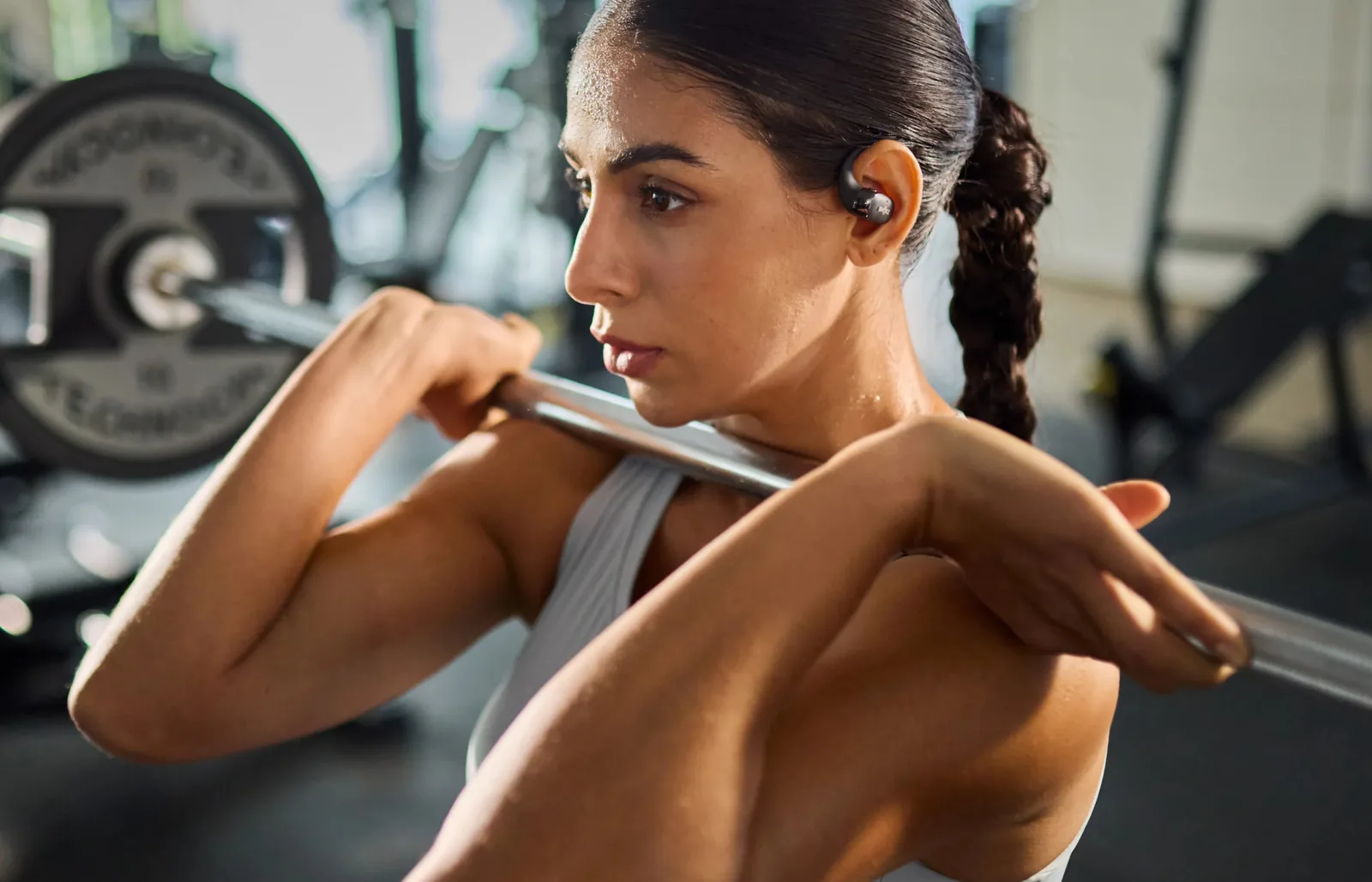
OpenFit 2 vs OpenFit 2+: the differences that matter
| Check | OpenFit 2 | OpenFit 2+ | Buying consequence |
|---|---|---|---|
| Model | T920 | T921 | Use the model and exact child offer, not the parent listing |
| Wireless case charging | No; USB-C | Qi plus USB-C | The cleanest reason to buy Plus |
| Dolby Audio | No | Optional in the Shokz app | Subjective processing, not a guaranteed upgrade |
| Battery claim | Up to 11 hours; 48 with case | Same; about two hours less with Dolby enabled | Plus doesn’t add headline runtime |
| Drivers and processing | DualBoost, OpenBass 2.0, DirectPitch 2.0 | Same core system plus Dolby | Don’t pay for a different physical driver platform |
| Weight | 9.4g per earbud; 53g case | 9.4g per earbud; 56g case | No documented fit advantage |
| Controls | Physical buttons plus touch area | Same | Same everyday control scheme |
| Calls | Four microphones total and Shokz AI processing | Same documented setup | Plus doesn’t have a verified mic-hardware advantage |
| Connectivity | Bluetooth 5.4 and multipoint | Same | Both can connect to two devices |
| Water resistance | IP55 earbuds; case not waterproof | Same | Neither case belongs in a wet gym bag |
The Plus upgrade list is shorter than some reviews say
Shokz's current OpenFit 2+ FAQ names two main upgrades over OpenFit 2: Dolby Audio and wireless charging. Its standard OpenFit 2 page already lists DualBoost, OpenBass 2.0, DirectPitch 2.0, four microphones, AI-assisted calls, physical buttons, multipoint, and the same ten-minute quick charge for two hours of listening.
That matters because some comparison coverage attributes DirectPitch 2.0, OpenBass 2.0, improved call hardware, or a different quick-charge rate to Plus. Those claims conflict with Shokz's current model documentation. We wouldn’t pay the Plus premium for any of them without a controlled matched test.
Choose by the two verified upgrades
Paid links. Gearsentials may earn a commission from purchases.
Best for: Standard for USB-C charging and the lower verified offer; Plus for Qi charging or Dolby you have auditioned. Skip if: The Plus premium is being justified by fit, driver, mic, leakage, or quick-charge claims that Shokz documents for both.
Wireless charging is the strongest reason to buy OpenFit 2+
The Plus case works on a Qi-certified pad and still accepts USB-C. That can be genuinely useful when a nightstand or desk already has a spare charging spot and the case is topped up by habit. It’s much less useful when the pad is shared with a phone or the case usually lives in a bag.
Wireless is also slower in Shokz's published conditions. The company lists roughly 100 minutes for an empty case over cable and approximately three hours on a compatible wireless charger. No wireless pad is included. If buying a pad is part of the upgrade, count that extra object and cost before calling Plus more convenient.

Dolby Audio changes the sound; it doesn’t guarantee better sound
Dolby Audio is an app-controlled mode on OpenFit 2+. It doesn’t replace the shared DualBoost drivers. The safest way to think about it’s as another tuning option: useful when its presentation matches the listener, unnecessary when the standard EQ already works.
Independent testing doesn’t produce one universal verdict. Tom's Guide tested both models and preferred the Plus mode's larger, fuller presentation. SoundGuys found the same mode boomy and fatiguing and preferred custom EQ; its objective default-mode response remained similar to OpenFit 2. That disagreement is the reason not to write “Dolby sounds better” as a product fact.
There’s also a battery tradeoff. Shokz says switching Dolby on reduces earbud runtime by approximately two hours. A buyer who leaves it off receives no audio-processing benefit from the Plus label.
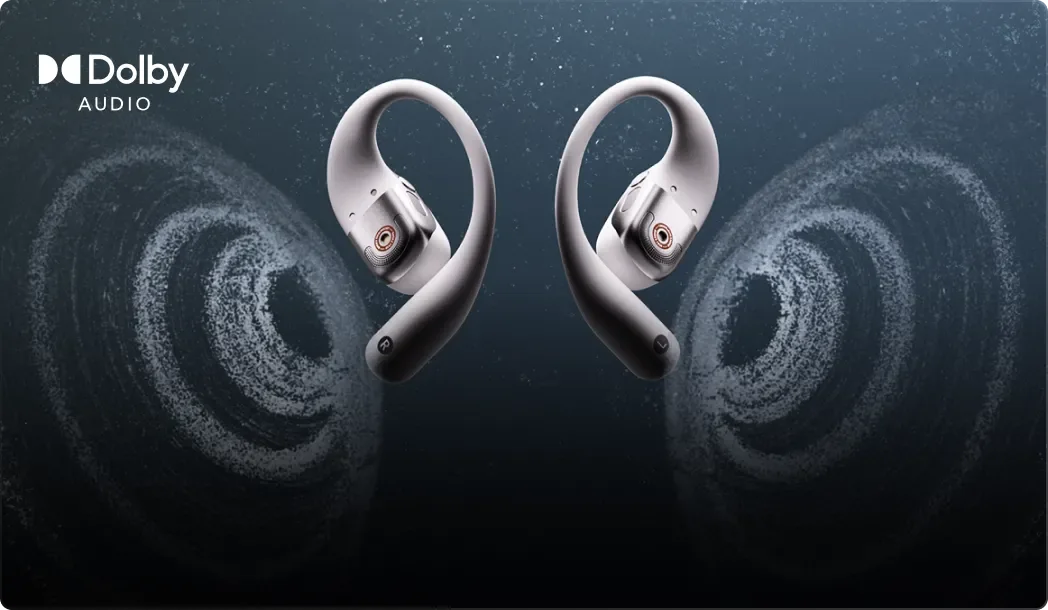
The open-ear design matters more than the Plus suffix
These are air-conduction earbuds, not bone-conduction headphones. A speaker sits outside each ear canal so the ear remains physically open. That’s useful when the goal is to hear a colleague, doorbell, or some environmental sound without removing an earbud.
The same openness limits isolation and low-frequency pressure. In a loud gym, train, or city street, outside noise competes with the audio. Turning the volume up can defeat the awareness reason for choosing open earbuds in the first place. Neither Dolby nor a Plus badge creates the seal of an in-ear tip or the attenuation of noise-canceling headphones.
Awareness isn’t a safety guarantee. Shokz tells users to keep volume controlled, remain attentive, and follow local rules. The ability to hear some surroundings doesn’t make distracted riding or driving safe.
Fit, controls, calls, and water resistance are shared
Both models use the same 9.4g earbud weight, flexible ear-hook design, silicone material, physical multifunction button, and configurable touch area. Shokz sells one universal size. Plus is not a documented solution for a buyer whose ears, glasses, or high-impact movement don’t agree with the standard fit.
Both also list Bluetooth 5.4, multipoint pairing, and two microphones in each earbud. Independent call and stability tests can describe one sample in one environment; they don’t establish different microphone hardware when Shokz publishes the same configuration for both.
IP55 applies to the earbuds, not the case. It covers tested dust and splash exposure, not swimming, showering, permanent water resistance, or charging while wet. The more expensive Plus case is still not waterproof.
Which Shokz OpenFit should you buy?
Buy OpenFit 2 when value is the priority
Choose the standard model when USB-C charging is fine and the exact offer is meaningfully lower. You keep the shared fit, drivers, controls, app EQ, multipoint, calls, IP55 earbud rating, and full headline battery claim.
Buy OpenFit 2+ for an existing Qi routine
Choose Plus when the case will regularly land on an available Qi pad. The routine is the value. Buying a new pad, moving a phone off its charger, or waiting longer for a wireless refill weakens the case for paying more.
Buy OpenFit 2+ after auditioning Dolby
Dolby can be a valid reason when the buyer has heard the mode and prefers it enough to accept the battery reduction. A reviewer's preference isn’t a substitute for that audition because tested opinions conflict.
Skip both when isolation is the job
Choose sealed or noise-canceling headphones when the main problem is a flight, train, loud gym, strong bass, or private listening at low volume. OpenFit is built around an open canal, and neither version changes that physical tradeoff.
The verdict
OpenFit 2 is the better default. It preserves the same documented earbud platform and avoids paying for two features that many buyers won’t use. Compare the exact current offers, because a small price gap can make the convenience calculation different.
OpenFit 2+ earns the upgrade when a Qi pad already has room for the case or when the buyer has auditioned and prefers Dolby Audio. Don’t buy it for a new fit, new drivers, better controls, stronger water resistance, or longer battery life; Shokz doesn’t document those advantages. The plus sign is doing more work than the hardware.
Choose the exact current model
Paid links. Gearsentials may earn a commission from purchases.
FAQ
What is the difference between Shokz OpenFit 2 and OpenFit 2+?
Shokz documents two main Plus-only upgrades: Dolby Audio processing and Qi wireless charging for the case. The two models otherwise share the same core drivers, fit design, controls, microphones, Bluetooth version, IP55 earbud rating, and headline battery claim.
Are OpenFit 2 and OpenFit 2+ bone-conduction headphones?
No. They are air-conduction open-ear earbuds. Small speakers sit outside the ear canal, unlike Shokz's OpenRun bone-conduction models, which send vibration through the cheekbone area.
Does the standard OpenFit 2 support wireless charging?
No. The standard OpenFit 2 case charges through USB-C. The OpenFit 2+ case adds Qi wireless charging and still supports USB-C. Shokz includes a USB-C cable, not a wireless charging pad.
Does Dolby Audio make OpenFit 2+ sound better?
It changes the sound, but better isn’t guaranteed. One matched reviewer preferred the larger presentation; another found the added reverb and bass tiring. Dolby can be switched off in the Shokz app, and Shokz says enabling it reduces earbud battery life by about two hours.
How long does the OpenFit 2 battery last?
Shokz claims up to 11 hours from the earbuds and up to 48 hours total with the charging case for both models. Actual runtime varies with volume, connection, features, and environment. Dolby Audio reduces the Plus model's claim by approximately two hours when enabled.
Are OpenFit 2 earbuds waterproof?
The earbuds carry an IP55 dust-and-water-resistance rating, which is suitable for sweat and splashes under the stated test conditions. The charging case isn’t waterproof. Don’t swim or shower with them or charge them while wet.
Is OpenFit 2+ the same as OpenFit Pro?
No. OpenFit Pro is a separate, newer premium model. OpenFit 2+ remains the OpenFit 2 platform with Dolby Audio and a wireless-charging case.
Sources
- Shokz OpenFit 2 specifications and package contents
- Shokz OpenFit 2+ specifications, charging, and comparison FAQ
- Shokz OpenFit 2 Series feature and safety notes
- Shokz OpenFit 2 user guide, model T920
- Shokz OpenFit 2+ user guide
- Shokz OpenFit 2+ controls, Dolby, charging, and multipoint guide
- Tom's Guide matched OpenFit 2 and OpenFit 2+ test
- SoundGuys OpenFit 2+ testing and measurements